
So states the World Health Organization in a statement published in The Lancet Public Health, 4 January 2023 , DOI:https://doi.org/10.1016/S2468-2667(22)00317-6.
The public is well aware of the short-term (cognitive impairment) and long-term effects (e.g. alcoholic disease, cirrhosis) but what may be less well known is that for decades, alcohol has been classified as a Group 1 carcinogen by the International Agency for Research on Cancer decades ago, and is known to cause at least seven types of cancer, including the most common cancer types, such as bowel cancer and female breast cancer. The other types of cancer that are associated with alcohol include oral cavity (mouth), oropharynx (throat), oesophagus (gullet), liver, and larynx (voicebox).
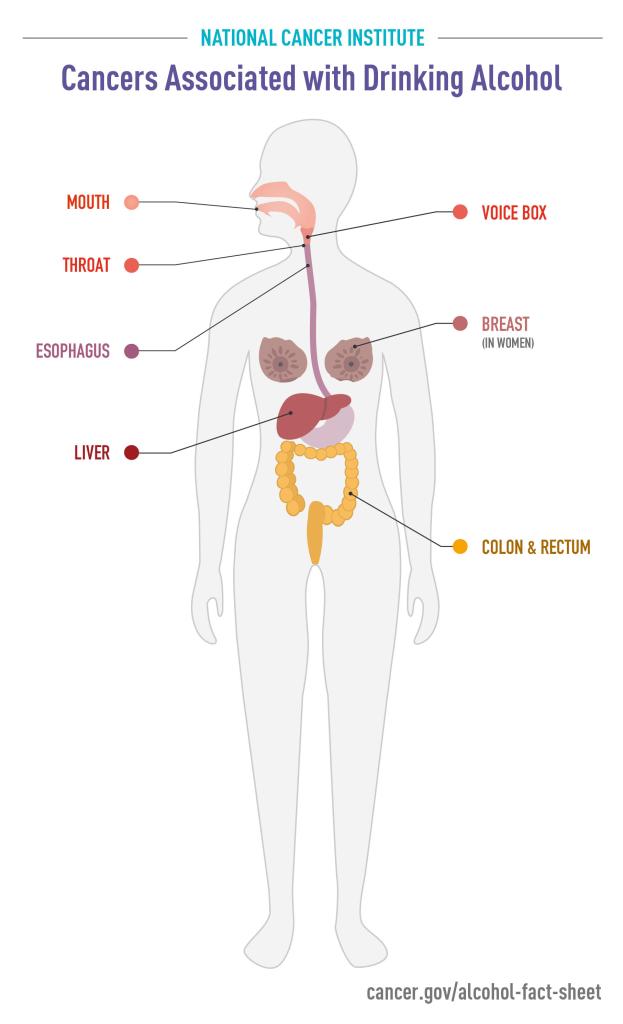
Figure from: https://www.cancer.gov/about-cancer/causes-prevention/risk/alcohol/alcohol-fact-sheet
In its report, light to moderate alcohol consumption in the EU was associated with almost 23,000 new cancer cases in 2017, accounting for 13·3% of all alcohol-attributable cancers and for 2·3% of all cases of the seven alcohol-related cancer types. Almost half of these cancers (approximately 11 000 cases) were female breast cancers. Also, more than a third of the cancer cases attributed to light to moderate drinking (approximately 8500 cases) were associated with a light drinking level (<10 g per day).
The new WHO statement clarifies: currently available evidence cannot indicate the existence of a threshold at which the carcinogenic effects of alcohol “switch on” and start to manifest in the human body. The new WHO statement goes even further, by stating that there are no studies that would demonstrate that the potential beneficial effects of light and moderate drinking on cardiovascular diseases and type 2 diabetes outweigh the cancer risk associated with these same levels of alcohol consumption for individual consumers.
The means by which alcohol can cause cancer is by causing mutations in DNA
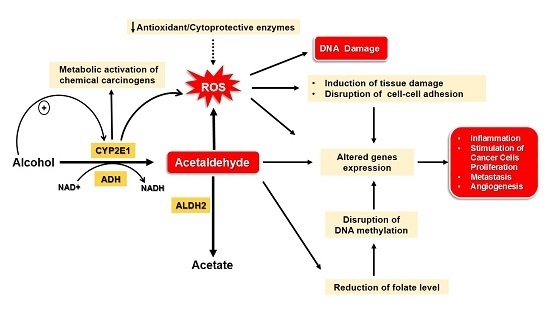
When alcohol (ethanol) is ingested, cells in the liver convert it to acetaldehyde, which in turn, binds to DNA molecules and induces mutations. Acetaldehyde also promotes the production of reactive oxygen species (ROS), which also bind to DNA molecules and induces mutations.
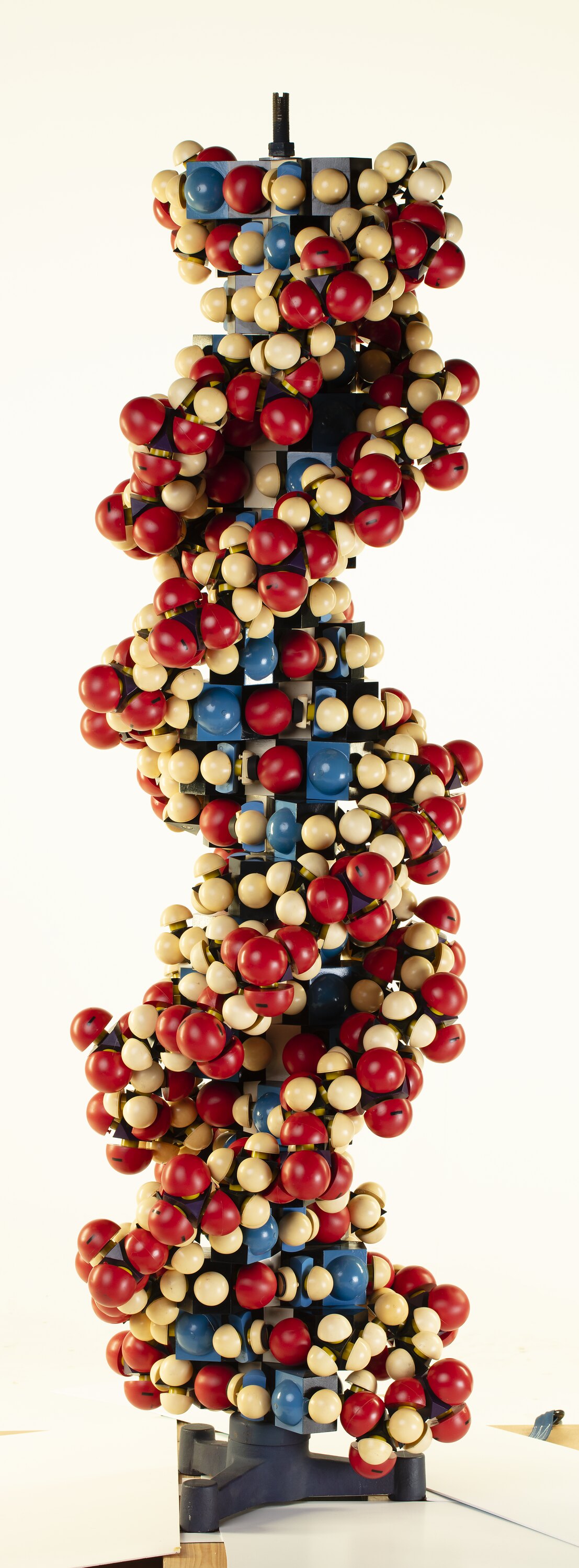
Repeated mutations of structural or regulatory genes will, in turn, induce affected cells to turn cancerous.
The following figure is from Ha, HK and Lee, JY (2017), Molecular Basis of Alcohol-Related Gastric and Colon Cancer, International Journal of Molecular Science 18(6):1116, https://doi.org/10.3390/ijms18061116.
What happens then?
Normal cells have a feature called “contact inhibition”, in which they are able to respond to the presence of neighboring cells by discontinuing mitotic division. Cancerous cells lose this ability to self-regulate and start growing and reproducing in an uncontrolled manner, leading to carcinogenesis and possible metastasis.
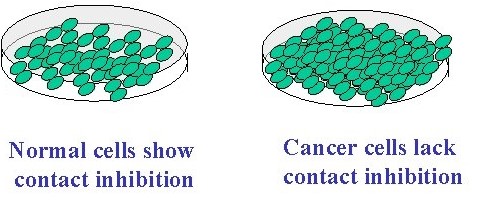
Once cells have lost contact inhibition for proliferation, a tumor will form:
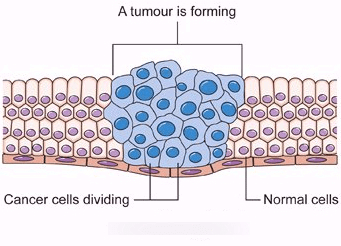
From: https://quizlet.com/235173653/164-tumorigenesis-tumour-formation-and-cancer-diagram/
 Addictions and Recovery