
We human beings have a long history with alcohol, dating back at least 30,000 years. This timeline of alcohol production is from A Timeline of the History of Alcohol (thoughtco.com):
Alcoholic substances have intoxicating, mind-altering properties that might have been restricted to elites and religious specialists, but they were also used in the maintenance of social cohesion in the context of feasting available to everyone in a community. Some herb-based beverages may have been used for medicinal purposes as well.
7000 BCE: The earliest evidence of wine production comes from jars at the Neolithic site of Jiahu in China, where residue analysis has identified a fermented concoction of rice, honey and fruit.
5400–5000 BCE: Based on the recovery of tartaric acid in ceramic vessels, people produced resinated wine, such as that on a fairly large scale at Hajji Firuz Tepe, Iran.
4400–4000 BCE: Grape pips, empty grape skins, and two-handled cups at the Greek site of Dikili Tash are the earliest evidence for wine production in the Aegean Sea region.
4000 BCE: A platform for crushing grapes and a process to move crushed grapes to storage jars are evidence of wine production at the Armenian site of Areni-1.
:max_bytes(150000):strip_icc():format(webp)/Ubaid_Pottery-5c44914b46e0fb000137268e.jpg)
4th millennium BCE: By the beginning of the 4th millennium BCE, wine and beer were produced in many locations in Mesopotamia, Assyria and Anatolia (such as the Ubaid site of Tepe Gawra) and treated as a trade and elite luxury good. At the same time, Predynastic Egyptian tomb paintings and wine jars are evidence of the local production of herb-based beers.
3400–2500 BCE: The predynastic community of Hierankopolis in Egypt had a large number of barley- and wheat-based brewery installations.
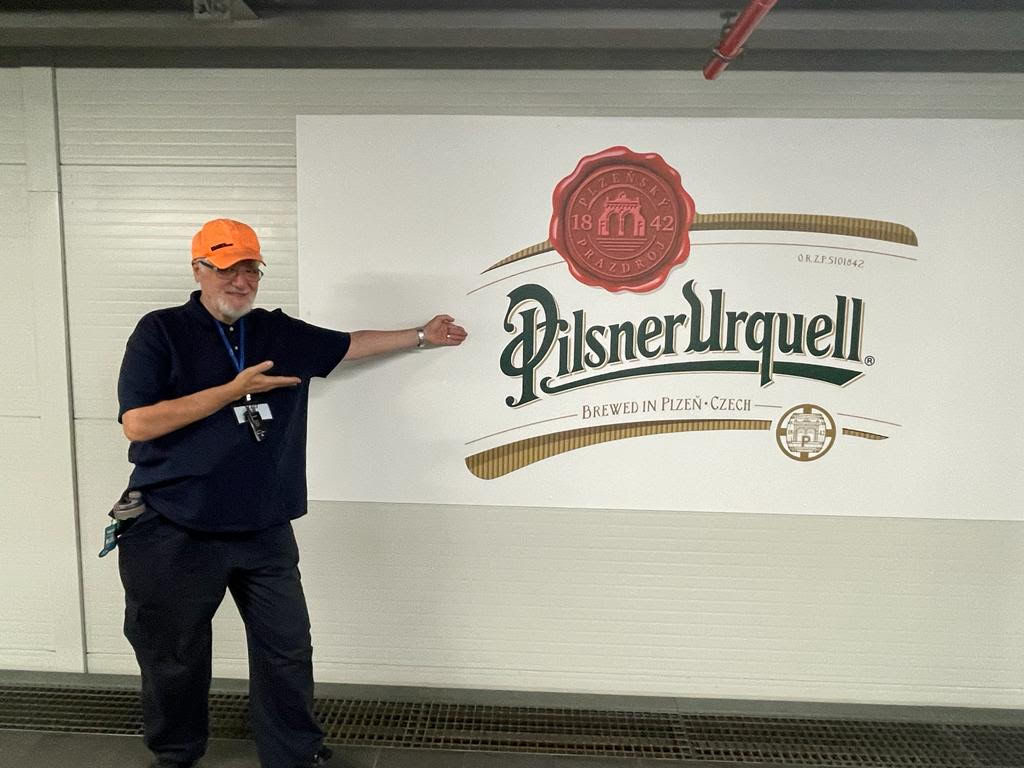
Summer 2023: That’s me, posing in front of a banner in the Pilsner Urquell plant in Pilsen, Czech Republic
We also have a very long history of alcohol misuse, documented in ancient writings from several civilizations, such as Greco-Roman, Indian and Chinese.
First, regarding Greco-Roman writings, from Alcoholism in the Greco-Roman World | Classical Wisdom Weekly:
The manner in which alcohol, mainly wine, was consumed played a part in preventing or minimizing alcoholism in these cultures.
The consumption of wine was famously a part of the Greek Symposium, an important Hellenic social institution during which young men were introduced into aristocratic society. Men of respected families engaged in discussions and debates while wine was served.
The overseer of the Symposium, the Symposiarch, would decide how the strong the wine should be depending on the kind of discussions to take place. If the event was a sensual indulgence, it would be stronger; for serious discussions, it would be light. Both Romans and Greeks mixed wine with water because drinking pure wine was seen as a habit associated with uncivilized people.
At a Greek Symposium, women weren’t allowed and wine was taken after dinner. At the similar Roman Convivium, wine was served before, during, and after a meal, and women were allowed at the gathering.
While foreign visitors occasionally reported of “mass drunkenness”, overall the ancient Greeks were generally considered very temperate among ancient people. Perhaps this was because of their rules and literature that stressed moderate drinking, recommended diluting wine with water, and praised temperance. For instance, Xenophon and Plato spoke highly of moderate wine consumption because it was good for health and promoting happiness, but they were also critical of the habit of drunkenness.
Nonetheless, there were exceptions, folks who believed in drinking to excess.
Take the cult of Dionysus, the Greek god of wine. Followers of Dionysus believed that becoming intoxicated brought them closer to their deity.
The Macedonians also, among Greeks, perceived intemperance as a sign of masculinity, so men could drink to intoxicate themselves. Alexander the Great is a famous example, and may have died as a result of his habit. (My note: As a retired parasitology professor, I can tell you that the prevailing opinion among parasitologists is that he probably died of malaria.)
Given these and other cases of excessive consumption, it is not surprising that the ancient Greeks had hangover remedies, such as taking boiled cabbage.
In contrast to the Greek ideal, the Romans had drinking habits that encouraged excessive consumption of wine, such as:
- They began drinking before meals on empty stomachs.
- They consumed excessive quantities of wine and food, and then vomited so that they had room for more.
- They played drinking games, including one where somebody would drink as many cups of wine as a throw of a dice indicated.
Clearly, in the first and second centuries BC, it was not uncommon to encounter intoxication among Greeks and Romans. However, initially it was not a universal vice and famous people like Cato the Elder and Julius Caesar only took wine in moderation. As moral values associated with drinking continued to decay, the habit of excessive drinking became more widespread.
Second, from Indian writings, from The History & Popularity of Alcohol in India | DESIblitz
Ancient Vedic texts dated back to 2000 BC are the earliest found that mention alcohol in India. They talk about the inebriating effects of Soma and Sura.
Soma is a drink that is produced from the plant of the same name and Sura is a fermented alcoholic beverage made from rice, barley and millet. Interestingly enough, prohibition was first mentioned as early as 200 BC.
Alcohol consumption was only denied to those of a priestly class such as elite Brahmins. During 1200-1700 AD, the Mughal era had a strong emphasis on prohibition in Islam but alcohol use was still high.
Mughal emperors themselves would regularly consume alcohol and opium. During the British rule of India, the manufacturing of alcohol was only allowed in licensed government distilleries.
Finally, regarding Chinese writings, from: Alcoholics in ancient times | The World of Chinese
Since ancient times, alcohol consumption has been an important part of Chinese culture. Alcohol always played an important role in different occasions, and there are numerous folk tales involving booze drinking.
Alcohol had great impact on artists than any other ones. Being drunk seemed to be one of the important tips Chinese artists resort to free their creativity. Many of them produced their best works after being drunk. The story of Li Bai (李白), from the Tang dynasty, one of the most famous poets in Chinese history, has been told so many times. Du Fu (杜甫), another poet of Tang, who was as great as Li, described Li’s love for alcohol in his poem “Song On the Eight Immortals in Drinking,” saying “Li Bai can write a hundred poems during drinking a dou (a unit of volume roughly equal to 6000 ml). He just sleeps in taverns of Chang’an. Even the emperor summons him, he doesn’t go, claiming that he’s the immortal of alcohol.” (李白斗酒诗百篇,长安市上酒家眠,天子呼来不上船,自称臣是酒中仙。)
Not only poem, but also painting and calligraphy were raised to higher level by the aid of alcohol. Wang Xizhi (王羲之), Chinese famous calligrapher, who was called Calligraphy Saint, finished one of his most outstanding works “Lantingxu (Orchid Pavilion Prologue)” when he was drunk. It was said he retried a lot of times to overwhelm that masterpiece, but all failed. The original one was the best.
Alcohol could also help enhance friendship. It’s quite understandable. People who kindly buy you a drink are easier to become a friend. To Tao Qian (陶潜), a poet in the Jin dynasty, also known as Tao Yuanming, booze was definitely a token of great friendship. Tao loved alcohol so much, that he even wrote a series of 20 poems with the same title “Drinking.” Tao resigned from his official position and lived in seclusion because he couldn’t accept the dark side of his career. But it meant that he had to live a poor life. Once a year, the Chongyang Festival was approaching, but Tao even had no money to buy booze, which made him very upset. But when he was pacing unhappily in his yard, an envoy in white came around, with alcohol, telling Tao that it was a gift from his friend Wang Hong. Tao was very glad. To express his gratitude, he drank himself down immediately. Now this story has been summerized into a chengyu— “people in white sending alcohol (白衣送酒),” describing that a friend send you something when you just need it.
He Zhizhang (贺知章), poet and calligrapher in the Tang dynasty, was another subject of Du’s “Song on Eight Immortals in Drinking.” Different from Tao, He was remembered as the one who treated others with alcohol. He was a government official of that time. One day, when Li Bai visited Chang’an, the capital, He encountered with him in a tavern. Reading Li’s fascinating poems, He was very glad to meet such a talented new friend. So he decided to buy Li some drinks. It happened that He didn’t take any money with himself that day. But that couldn’t change his mind to treat Li. He took off his gold-turtle baldric, which was a token only for high-level officials, and gave it to the tavern in exchange for some booze. He and Li boozed happily until they both got drunk. And this story was then called “Gold turtle in exchange of alcohol (金龟换酒)”, which was widely spread as a proof of He’s generosity.
And the situation now?
According to the US National Center for Health Statistics, 52.8% of adults above the age of 18 regularly consume alcohol. However, a smaller percentage manifest the symptoms of Alcohol Use Disorder.
According to the National Institute on Alcohol Abuse and Alcoholism (NIAAA), the prevalence of alcohol use disorder (AUD) in the United States varies depending on the age group. Here are some key statistics:
- For people aged 12 and older, approximately 10.6% of the population had AUD in the past year, which corresponds to around 29.5 million individuals.
- Among adults aged 18 and older, the prevalence of AUD in the past year was approximately 11.3%, equivalent to 28.6 million adults.
- In terms of gender, the prevalence of AUD among adult men was estimated to be 12.4%, while among adult women it was estimated to be 4.9%.
- The highest prevalence of AUD was observed in individuals between the ages of 18 and 29, with an estimated rate of 16.2%.
- On the other hand, individuals aged 65 and older had the lowest prevalence of AUD, with an estimated rate of 1.5%.
So large numbers of people consume alcohol, but a considerably smaller number of them develop the symptoms associated with alcohol use disorder:
- Being unable to limit the amount of alcohol you drink;
- Wanting to cut down on how much you drink or making unsuccessful attempts to do so;
- Spending a lot of time drinking, getting alcohol or recovering from alcohol use;
- Feeling a strong craving or urge to drink alcohol;
- Failing to fulfill major obligations at work, school or home due to repeated alcohol use;
- Continuing to drink alcohol even though you know it’s causing physical, social, work or relationship problems;
- Giving up or reducing social and work activities and hobbies to use alcohol;
- Using alcohol in situations where it’s not safe, such as when driving or swimming;
- Developing a tolerance to alcohol so you need more to feel its effect or you have a reduced effect from the same amount;
- Experiencing withdrawal symptoms — such as nausea, sweating and shaking — when you don’t drink, or drinking to avoid these symptoms.
(From Alcohol use disorder – Symptoms and causes – Mayo Clinic)
With all that as background, what are the neural roots of alcoholism?
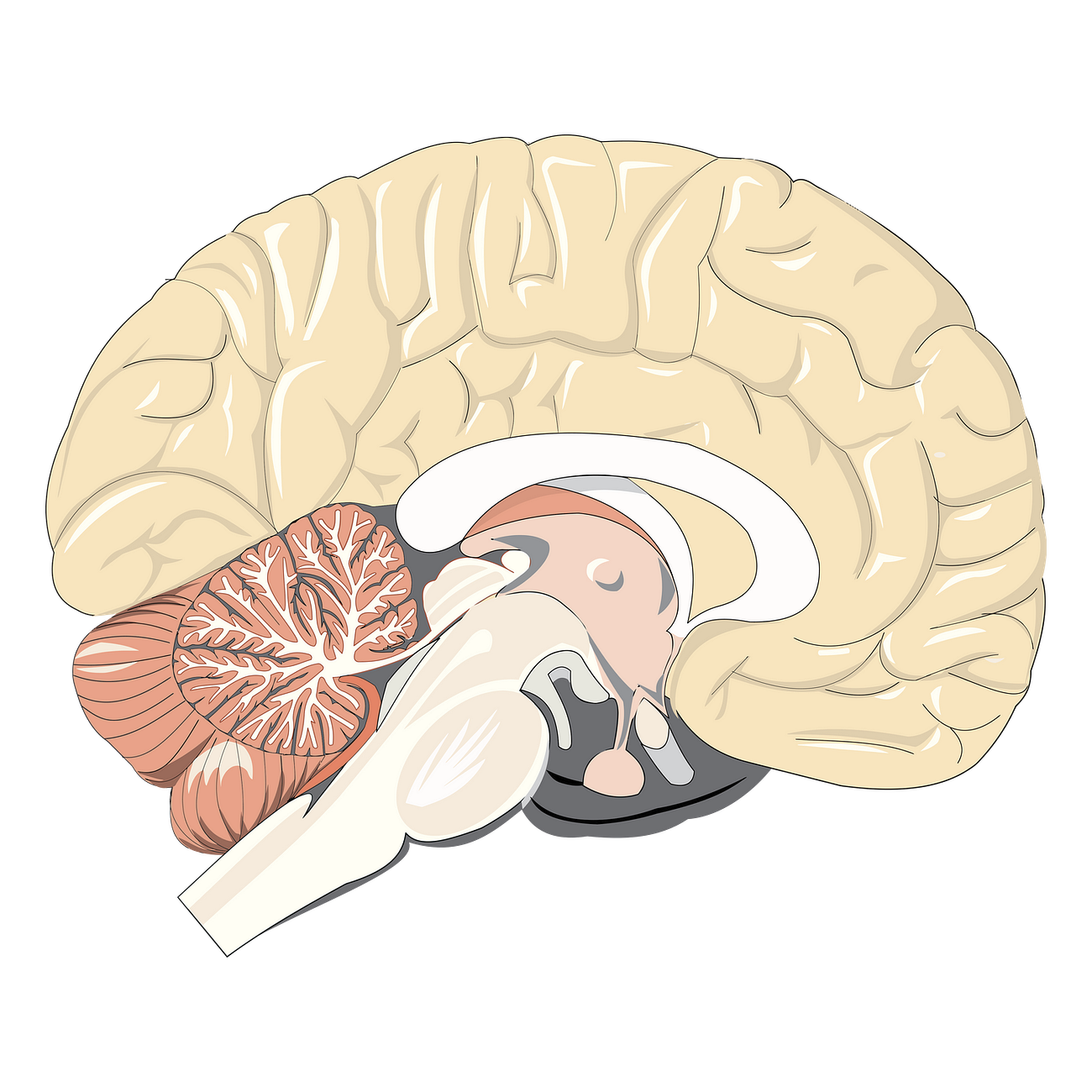
A review article in the 8 February 2021 issue of Science Daily, Neural roots/origins of alcoholism identified, describes the normal neural pathway when the brain senses an unpleasant or emergency situation, how that sensation gets transmitted to another part of the brain to determine whether to escape the situation, and what alcohol does to disrupt that pathway.
The medial orbitofrontal cortex (mOFC) found at the front of the brain, senses an unpleasant or emergency situation, and then sends this information to the dorsal periaqueductal gray (dPAG), in the brain’s core, for processing whether we need to escape the situation. In laymen’s terms, the medial orbitofrontal cortex is located in the “thinking” part of the brain, while the dorsal periaqueductal gray is located in the “feeling” or “survival” part of the brain.
Alcohol inhibits the dorsal periaqueductal gray (dPAG) so that the brain cannot respond to negative signals or the need to escape from danger, thus leading a person to only feel the benefits of drinking without being cognizant of its harmful effects. This effect may induce compulsive drinking.
Furthermore, an alcoholic may have an over-excited dPAG, thus making feel that they are (constantly or frequently) in an adverse or unpleasant situation that they wish to escape. If so, they will turn to alcohol to do so, and this is the cause of impulsive drinking.
The scientists who conducted this study then recruited participants to undertake task-based functional MRI scans. When these participants did not receive rewards in the tasks, which produced negative feelings of punishment, regulation between the aforementioned parts of the brain was inhibited more highly in participants who had exhibited alcohol abuse. Those individuals who demonstrated a more overexcited regulation pathway between the dPAG and the mOFC also had increased levels of alcohol abuse.
As I read these results, the implication to me is that consumption of alcohol becomes compulsive when it is conflated with survival.
 Addictions and Recovery