
“Of all of civilization’s occupational categories, that of soldier may be the most conducive to regular drug use.” — D.T. Courtwright, Forces of Habit: Drugs and the Making of the Modern World, 2001.
I. Stimulants
A. Methamphetamine
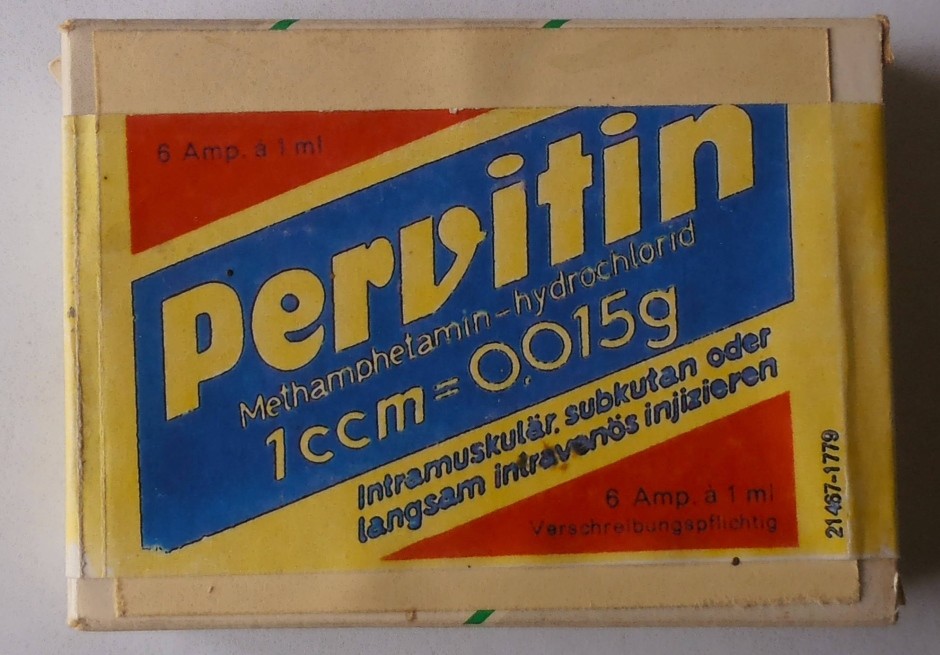
The drug that fueled the Blitzkrieg
I was prompted to write a blog on the use of psychoactive drugs during combat after reading an article by Peter Andreas, author of Killer High: A History of War in Six Drugs, entitled How Methamphetamine Became a Key Part of Nazi Military Strategy.
In this article, Mr. Andreas described the crucial role methamphetamine played in the early stages of World War II, as part of the Blitzkrieg, or lightning war, strategy, in which German armies advanced with great speed and without sleep, managing to overrun enemy positions. With Pervitin, the brand name of methamphetamine produced by the Temmler-Werke pharmaceutical company, soldiers were able to traverse 240 miles of challenging terrain, including the Ardennes Forest, in 11 days during the invasion of France.
Andreas states that the drug was dispensed to pilots and tank crews in the form of chocolate bars known as Fliegerschokolade (flyer’s chocolate) and Panzerschokolade (tanker’s chocolate).
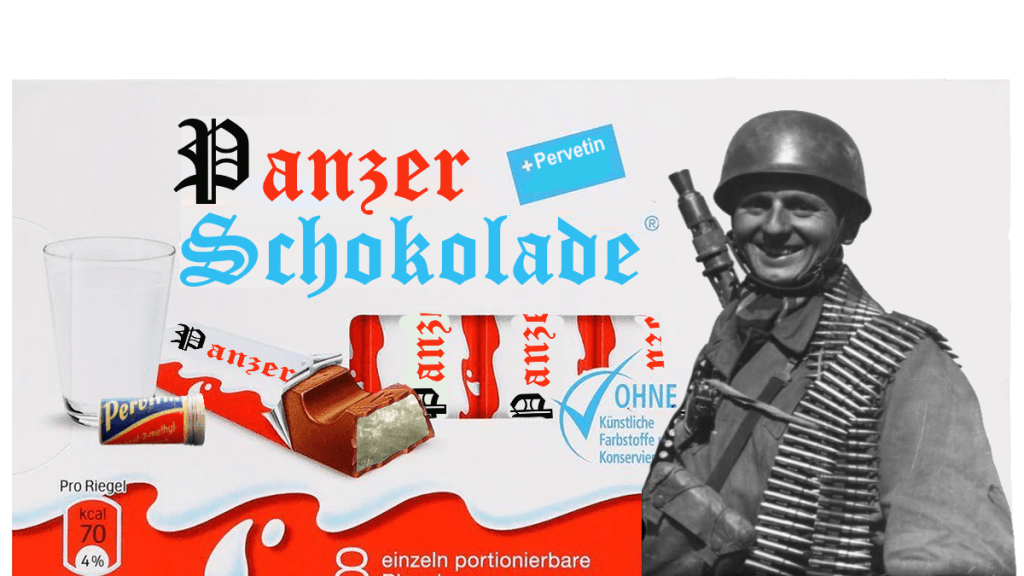
As many as 833,000 tablets of Pervitin were pressed every day, and between April and July 1940, German servicemen received more than 35 million methamphetamine tablets. Eventually, the production and use of these tablets tapered off by 1942, when the German medical establishment formally acknowledged that amphetamines were addictive.
German servicemen were not alone in their use of amphetamines. Amphetamine was also given to Allied bomber pilots during World War II to sustain them by fighting off fatigue and enhancing focus during long flights.
During the Vietnam war, “pep pills” were usually distributed to men leaving for long-range reconnaissance missions and ambushes (Kamienski, 2016). In 1971, a report by the House Select Committee on Crime revealed that from 1966 to 1969, the armed forces had used 225 million tablets of stimulants, mostly Dexedrine (dextroamphetamine).
These drugs had multiple effects:
- Servicemen were able to stay awake longer;
- They provided a sense of bravado and invulnerability;
- They enhanced their senses of sight and sound;
- Servicemen reported that the use of these drugs increased their aggression
B. Cocaine
The Netherlands became the world’s leading producer of pure cocaine around 1910, with most of the coca leaves coming from Bolivia and Peru. While the Netherlands remained neutral during World War I, the Dutch company Nederlandsche Cacinefabriek (NCF) sold cocaine to both the Central Powers and the Allies. Both sides used the drug, administered by commanders, doctors, and and prescribed by the soldiers themselves.
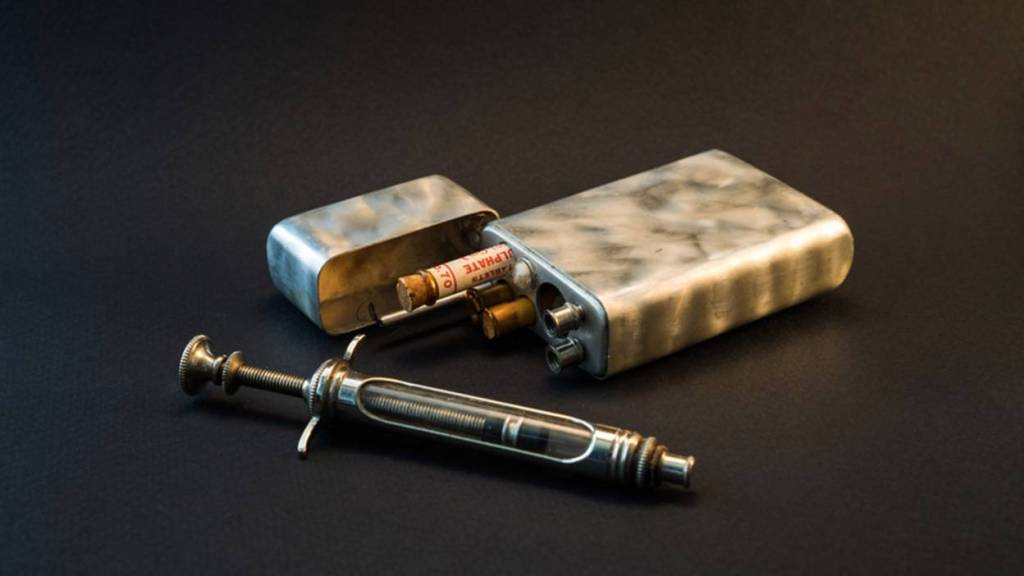
During the First World War, department stores, including Harrods, sold kits containing syringes, needles and tubes of cocaine and heroin. It was promoted as a present for friends on the frontline – shoot up to make life in the trenches more bearable and alleviate the horrors of war. From https://www.bbc.co.uk/bbcthree/article/966b1bdd-69ff-4de0-9c39-d9276eba706b .
C. Captagon
According to a report issued by the Israel Defense Force, “On October 7th, 2023, thousands of armed Hamas terrorists tore down large parts of the Gaza security fence using tractors, RPGs and explosives and invaded southern Israel. Simultaneously, Hamas terrorists in Gaza fired thousands of rockets toward Israel.
Some 1,500 terrorists successfully broke through the fence in vehicles and by foot. Some used motorized paragliders to fly over the fence, and others attempted to invade through the sea, aiming for Israel’s Zikim Beach.” (https://www.idf.il/en/mini-sites/hamas-israel-war-24/all-articles/what-happened-in-the-october-7th-massacre/)
These terrorists killed 1,200 people and kidnapped 252 others in the worst massacre of Jews since the Holocaust (jinsa.org/jinsa_report/gaza-war-observations-2023-2024/ ).
Captagon was found in large amounts on Hamas terrorists killed in this attack. This drug, also known as ISIS’ “chemical courage” and the “poor man’s cocaine” is a stimulant whose effects are described by Gali Weinreb:
“No matter how tired you are, it makes you wake up. Your senses become very sharp. Sometimes you don’t sleep for 24 or 48 hours, depending on how many pills you take. If you shoot someone on Captagon, they don’t feel it. And if someone takes many pills, like 30 or so, they become violent and crazy, paranoid, unafraid of anything…They’ll have a third for fighting and killing and will shoot at whatever they see. They lose any feeling or empathy for the people in front of them and can kill them without caring at all. They forget about their mother, father, and their families. They build up a tolerance to it, so they always need to take more.” (https://en.globes.co.il/en/article-the-drug-that-stimulates-and-finances-terrorists-1001462238 ).
Dr. Shaul Lev-Ran, MD, Deputy Director of Lev Hasharon Medical Center and Founder and Head of the Israel Center on Addiction states the following: “People make other people cruel through propaganda and brainwashing. The Hamas terrorists practiced their murderous plan, knew exactly what they were going to do, and took these drugs to help them do it.”
Captagon is the most popular stimulant in the Middle East, known among other things as “the poor man’s cocaine”, and it fuels terrorism in the Arab world – both as a product consumed by the people carrying it out, and as a driver of the terrorist economy. The value of the trade in the drug is estimated to be in the billions of dollars annually.

Fake oranges filled with illegal Captagon pills at the Beirut port in Lebanon, on December 29, 2021. (Anwar Amro/AFP)
“Captagon” is one of several trade names for a drug called fenethylline, which was first synthesized in 1961 and marketed as a treatment for depression and for attention disorders in children. It took several years for scientists to realize that it is highly addictive, so in 1981, it was banned in the Unites States.
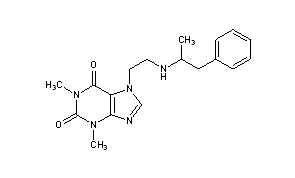
Fenethylline chemical structure
While production and use in the US and Europe declined, the opposite has occurred in Arab states. Hezbollah, followed by the parties fighting in Syria, began manufacturing Captagon and marketing it in the Arab World. Estimates suggest that 80% of the world’s Captagon supply is produced in Syria.
So Captagon serves two useful purposes — on one hand, it finances terrorist organizations, and on the other it fuels terrorism itself.
At high doses, abusers can have aural and visual hallucinations, psychotic episodes or extreme dysphoria.
II. Antipsychotics
I have had several friends who served in combat units in Vietnam. Solders were typically sent on day missions in which they would be dropped off by helicopter at one end of a village, with the assignment of clearing the village of Viet Cong and North Vietnamese soldiers, and being picked up by helicopter at the end of their “work day”. The combat was always at close range. Antipsychotic drugs were heavily prescribed to reduce the mental trauma associated with combat in Vietnam, combatting mental breakdowns. While the short-term effect of giving soldiers a sense of control was beneficial, the suppression of emotion led to an unprecedented level of post-traumatic stress syndrome (PTSD) after the war. By the time the US withdrew from Vietnam, 70% of US soldiers had used some form of intoxicant; half of US soldiers smoked marijuana and over a quarter used heroin (Kamienski, 2016b).
III. Depressants
A. Alcohol
Alcohol as a drug of warfare has had the longest “career” of any drug and has been the most widespread. It has played four major roles in warfare: medical, stimulant, mental-therapeutic, and physiological (Richardson, 2020).
During World War I, alcohol was served as a remedy for stress, fatigue, and hardship with many soldiers taking to the alcohol with religious fervor. Veterans of the war wrote afterwards wrote afterwards that if were not for the rum ration, they would not have won.
Not surprisingly, however, the price that is due for using psychoactive drugs such as alcohol is dependence and addiction. On page 1 of Bill Wilson’s Alcoholics Anonymous, he recites a doggerel on an old tombstone at Winchester Cathedral:
“Here lies a Hampshire Grenadier
Who caught his death
Drinking cold small beer.
A good soldier is ne’er forgot
Whether he dieth by musket
Or by pot.”
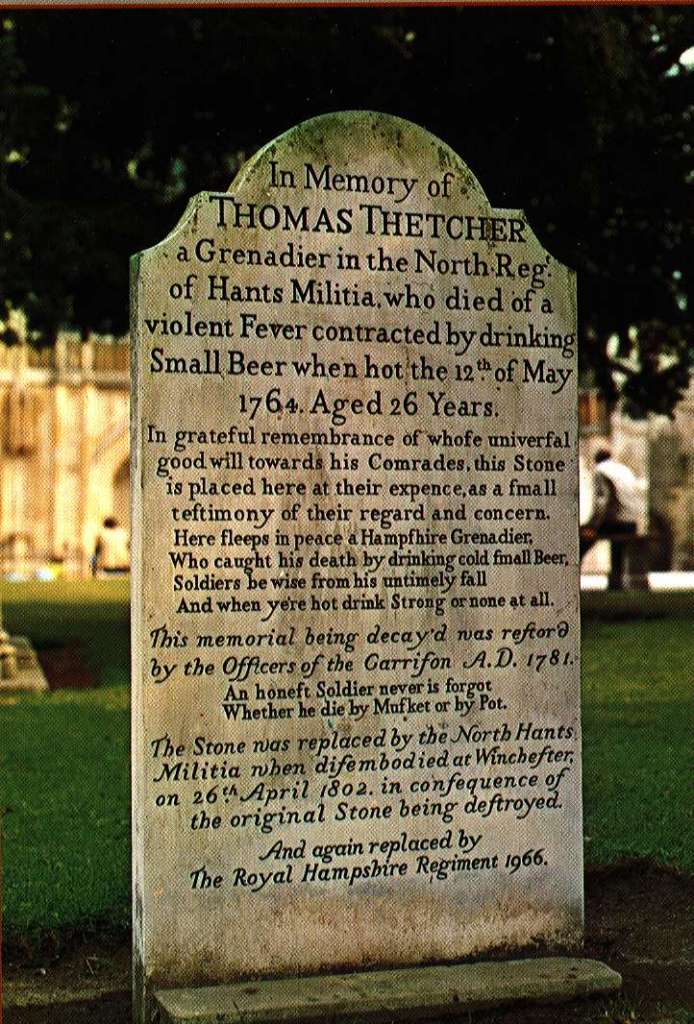
During World War II, alcohol was given freely to individuals in German Reserve Police Battalions who responsible for rounding up and murdering civilians (Browing, 1993). It was also given to the engineers of trains bringing deportees to extermination campus so they wouldn’t have to hear the screams and cries of people transported in cattle cars.
B. Opioids
During the American Civil War, 1861-1865, doctors and nurses used opium and morphine to treat soldiers’ pain, stop internal bleeding and control vomiting and diarrhea caused by infectious diseases. Some soldiers developed addictions, either during the war or afterward, and these addictions were life-ruining (Little, 2023).
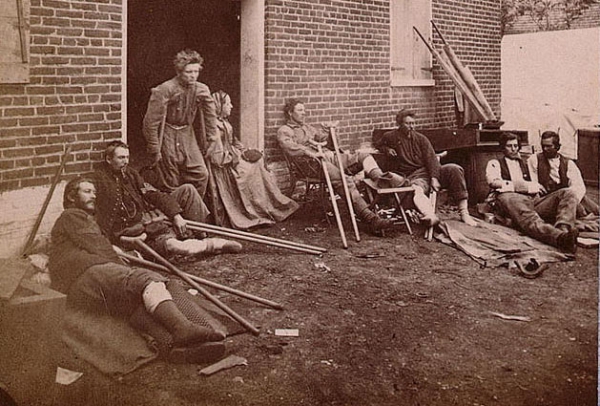
For example, in 1895, a Union veteran named Charles L. Williams stated in an application to a soldiers’ home that he was “totally unable to earn a living” since he had “contracted [the] opium habit during war.”
The use of opioids to treat wounded soldiers during the Civil War led to America’s first opioid crisis (Little, 2023). This crisis was exacerbated by the invention of the hypodermic syringe, with which a physician could inject precise amounts of opioids into a patient’s vein.
After the war ended, veterans returned home and continued taking opium and injectable morphine.
Interestingly enough, John Stith Pemberton, a Confederate officer and pharmacist, created Coca-Cola as a treatment for opioid addiction. During a battle that occurred after Robert E. Lee surrendered at Appomattox, Pemberton was both shot, and then slashed with a saber, leaving painful scars. The pain was treated with morphine, and Pemberton himself admitted that he became dependent on morphine (Gardiner, https://csuepress.columbusstate.edu/cgi/viewcontent.cgi?referer=https://www.google.com/&httpsredir=1&article=1172&context=bibliography_faculty).
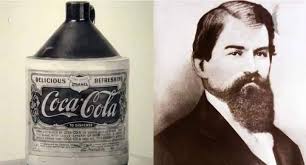
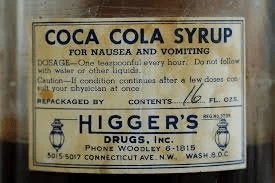
The significant elements of the syrup Pemberton created were the coca leaf and kola nut. He, and physicians of his time, did not know the risks associated with the use of cocaine. In fact, he wrote, “I am convinced from actual experiments that coca is the very best substitute for opium…It supplies the place of that drug, and the patient who will use it as a means of a cure, may deliver himself from the pernicious habit.”
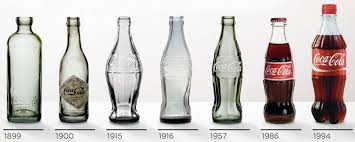
Sadly, he remained a morphine addict for the rest of his life.
Andreas, P. (2020). How Methamphetamine Became a Key Part of Nazi Military Strategy. https://time.com/5752114/nazi-military-drugs/
Browing, C.R. (1993). Ordinary Men: Reserve Police Battalion 101 and the Final Solution in Poland. New York, NY, Harper Perennial.
Kamienski, L. (2016). The Drugs That Built a Super Soldier. https://www.theatlantic.com/health/archiv/2016/04/the-drugs-that-built-a-super-soldier/477183 .
Kamienski, L. (2016b) Shooting Up: A History of Drugs in Warfare. Oxford, UK, Oxford University Press.
Richardson, M.T. (2020). Creating the Warrior Mentality Through Chemical Influence: The Use of Drugs in Warfare and Its Consequences. The Macksey Journal 1, Article 34. https://www.mackseyjournal.org/publications/vol1/iss1/34 .
 Addictions and Recovery