

I. Defining betel nut, areca nut, and betel quid.
Most of the people who access the posts on this “Addictions and “Recovery” blog come from North America, Europe, or Israel. Most people from these regions may not be aware of the fact that betel nut is considered the fourth most addictive substance in the world after tobacco, alcohol, and caffeine. In fact, it is estimated that it is used by 10-20% of the world’s population (Chen, et. al. 2022).
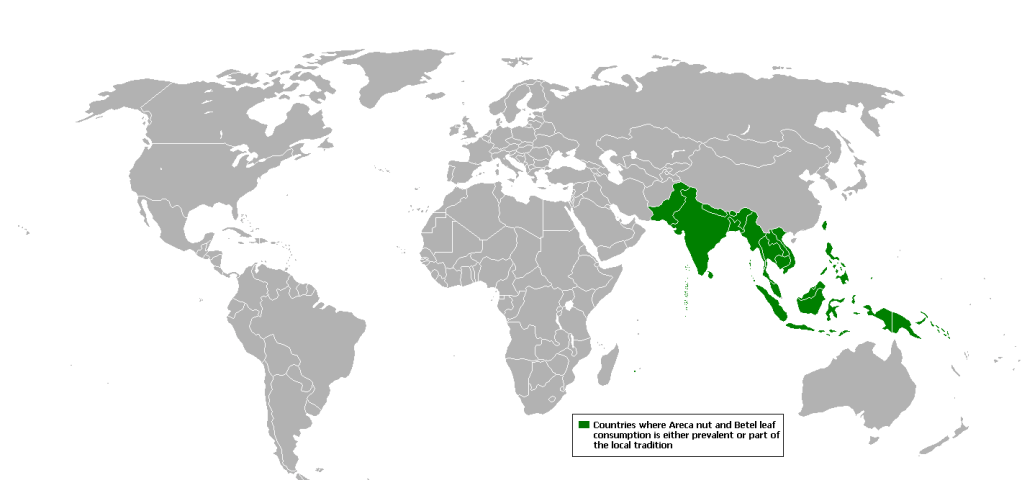
(Original upload date – 30 July 2008; Source – Transferred from en.wikipedia to Commons by Vinhtantran using CommonsHelper; Author – Mohonu at English Wikipedia.)
The betel nut is the fruit of the areca palm tree, so the terms “betel nut” and areca nut” refer to the same thing. Users state that “it is helpful for digestive and oral health, as well as for facilitating bowel movements, increasing stamina, and improving concentration (Langappa, et. al., 2014). Furthermore, it is claimed to dispel nausea, improve cognitive performance, fight parasitic infections and hypertension, and acts as an antidepressant (Chen, et. al. 2022).

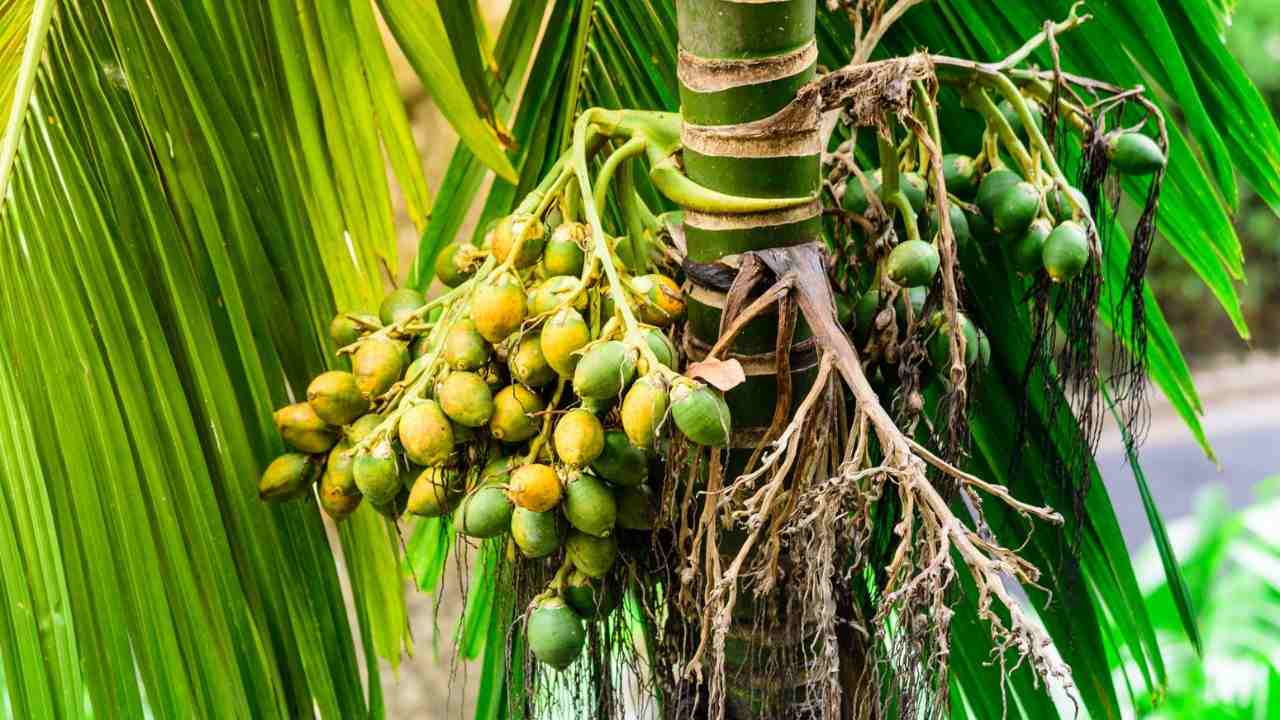
Betel nuts can be chewed alone, but it is most commonly mixed with a combination of ingredients:
“Chewing betel quid—it generally contains betel leaf, areca nut and slaked lime, and may contain tobacco—typically starts in adolescence and is associated with smoking and drinking alcohol, which are also risk factors for oral cancer.” – From https://www.dental-tribune.com/news/study-finds-almost-all-myanmar-mouth-cancer-patients-chew-betel-quid/ .
The mixture may also contain menthol; sandal oil; spices, such as cloves, anise seed, cinnamon, and nutmeg; and finely pounded gold or silver metal.
These ingredients are usually mixed with calcium hydroxide paste (slaked lime) and tobacco, and then wrapped in a betel leaf. The user sucks on or chews the mixture for 15 – 20 minutes, after which the user spits it out.
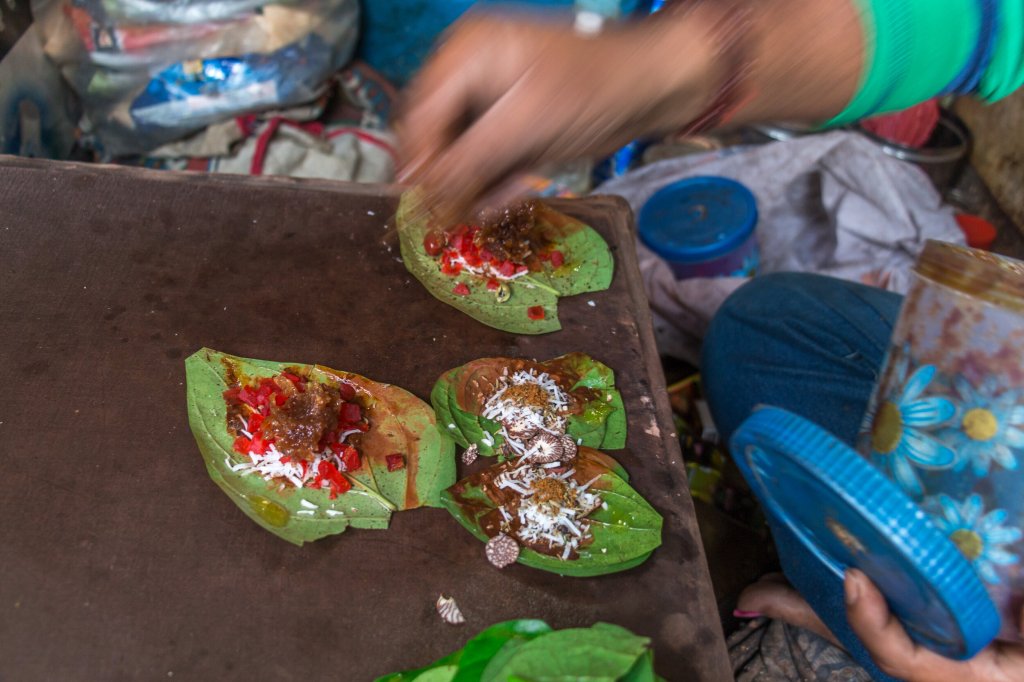
(Figure from https://www.whetstonemagazine.com/journal/through-indias-long-history-the-betel-leaf-remains-a-constant)
The mixture induces the feeling of euphoria and may cause increased perspiration and tear production, pupillary constriction, and diarrhea.
II. Prevalence of use
An estimated 200 million to 600 million people chew quid regularly throughout large parts of India, Bangladesh, the Federal Republic of Malanasia, East Africa, and the South Pacific. In some regions, boys and girls as young as 7 years of age will begin betel quid chewing. Habitual users will engage in betel quid chewing during all waking hours, and there are reports indicating that mothers will give their infants premasticated quids (Gupta, 2002; Papke, et. al., 2015).).
III. Arecoline is the psychoactive element in betel nuts
Betel chewing has been claimed to produce a sense of well-being, euphoria, heightened alertness, sweating, salivation, a hot sensation in the body and increased capacity to work. Betel chewing also leads to habituation, addiction and withdrawal.
In the presence of lime, arecoline is converted into arecaidine, which is a strong inhibitor of GABA uptake. GABA, in turn, is the principal inhibitory neurotransmitter of the brain, so arecaidine would tend to prolong the presence of GABA in the synapses into which it was released, and thereby prolong its inhibitory effects (Chu, 2001).
Arecoline acts on the same receptors of the brain as nicotine does, which can account for its addictive potential.
Betel chewing has multiple detrimental effects:
- It increases heart rate and blood pressure;
- It induces sweating and body temperature;
- It increases the risk of obesity and hyperglycemia;
- It causes hypothyroidism and vitamin D deficiency;
- It interferes with the immune system by suppressing T-cell activity and decreased release of cytokines.
How prevalent is the problem of BQ Abuse/Addiction? One Taiwanese study states that the prevalence rate of BQ abuse in men is 4.9%, whereas the prevalence rate in women is 1.7% (Lee, et. al., 2012).
IV. Carcinogenesis
In vitro and in vitro tests show that arecoline and its breakdown product, arecaidine, can induce the exchange of sister chromatids, cause aberrations of chromosomes, and induce the formation of micronuclei. Furthermore, arecoline causes dysregulation of oral epithelial cells, leading to cell cycle arrest (Chen, et. al., 2017).
With continued quid chewing, the first change in tissue integrity observed is an increased incidence of oral submucous fibrosis (OSF), in which there is an abnormal proliferation of tissue in the mucosal lining of the upper digestive tract and oral cavity. The tongue often stiffens and exhibits papillary atrophy. Signs of OSF include sensitivity to spicy foods, an increase in saliva, altered taste, a nasalized voice, and subsequent difficulty in eating, swallowing and speaking. Mucosal leukoplakia (i.e., an abnormal condition in which thickened white patches of epithelium occur on the mucous membranes (as of the mouth) may appear with OSF, and this condition is regarded as a precancerous condition with a 7.6% malignancy transformation rate.
The tobacco used in betel quid will increase the risk of oral cancer, which is the sixth most common malignancy in the world. Oral squamous cell carcinomas may occur independently or in association with OSF.
The problems caused by chewing betel quid can be significant. In Southeast Asia, 30% of oral cancers are caused by the chewing of betel quid containing tobacco. Furthermore, it appears that betel nut and tobacco act synergistically to produce oral cancer (Nelson and Heischober, 1999).
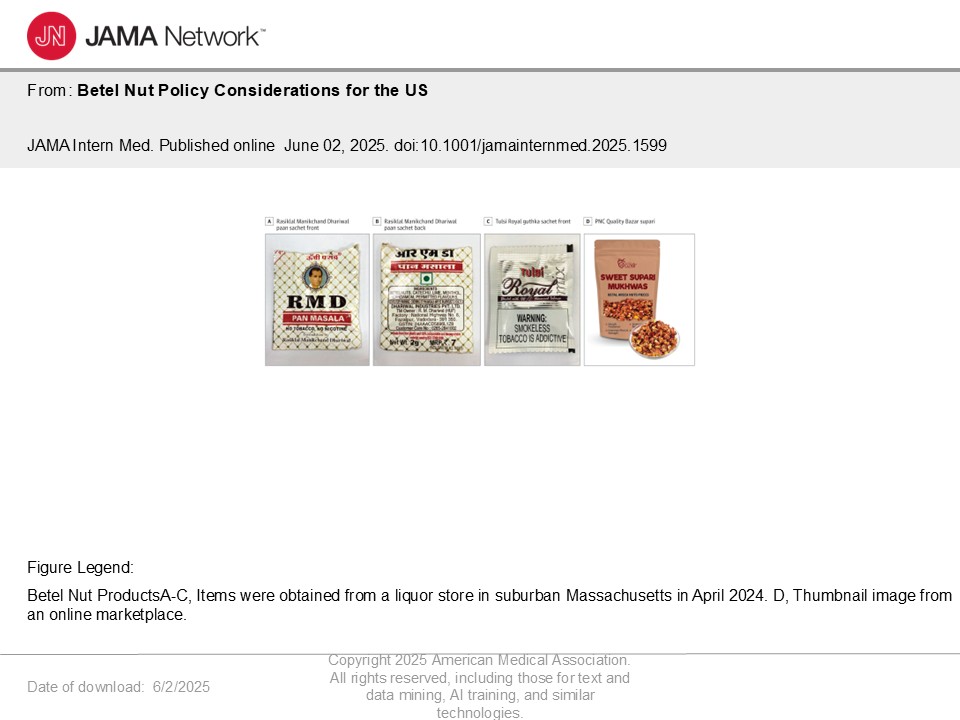
Finally, betel nut and betel nut products are not regulated in the United States, and their advertising can be deceptive. For example, PNC Quality Bazar sweetened supari, which consists of betel nut coated in sugar, is advertised as a “breath freshener” that “improves muscle strength” (Wu, et. al., 2025).
P.S.: It makes your mouth turn red, as shown below

Details of photo: Date: 31 January 2014; Credit: David Swanson/IRIN; Location: Papua New Guinea; appearing in https://www.thenewhumanitarian.org/photo/201401310532040676/woman-chews-betel-nut-goroka-provincial-capital-eastern-highlands-betel-nut
Chen, L.; Yuan, F.; Chen, S.; Li, X.; Kong, L.; Zhang, W. (2022). Potential Role of Host Microbiome in Areca Nut-Associated Carcinogenesis and Addiction. Molecules 27, 8171. https://doi.org/10.3390/molecules27238171 .
Chen, P.-H.; Mahmood, Q.; Mariottini, G.L.; Chiang, T.-A.; Lee, K.-W. (2017). Adverse Health Effects of Betel Quid and the Risk of Oral and Pharyngeal Cancers. BioMed Research International Volume 2017, Article ID 3904098. https://doiorg/10.1155/2017/3094098.
Chu, N.S. (2001). Effects of Betel chewing on the central and autonomic nervous systems. J Biomed Sci 2001 May-Jun;8(3):229-36. doi: 10.1007/BF02256596.
Gupta PC, S. (2002). Global epidemiology of areca nut usage. Addict Biol. 2002;7:77–83.
Lee, C.-H.; Ko, A. M.-S.; Warnakulasuriya, S., et. al. (2012). Population burden of betel quid abuse and its relation to oral premalignant disorders in South, Southeast, and East Asia: An Asian Betel-Quid Consortium study. American Journal of Public Health 102(3):pp. e17-e24.
Lingappa A, Nappalli D, Sujatha G, Prasad S. (2014). Areca nut: To chew or not to chew? Available at: ejournalofdentistry.com/articles/e-JOD3 BC4F9E2-1D5E-4659-A0C3-DAD2ABA83528.pdf. Accessed January 21, 2014.
Nelson BS, Heischober B. (1999). Betel nut: a common drug used by naturalized citizens from India, Far East Asia, and the South Pacific islands. Ann Emerg Med. 1999;34:238–243.
Papke, R.L.; Horenstein, N.; Stokes, C. (2015). Nicotinic Activity of Arecoline, the Psychoactive Element of “Betel Nuts”, Suggests a Basis for Habitual Use and Anti-Inflammatory Activity. PLoS ONE 10(10):e010907, https://doi.org/10.1371/journal.pone.p140907.
Wu, N.; Roberts, T.J.; Taparra, K.; Moss, W.J. (2025). Betel Nut Policy Considerations for the US. JAMA Internal Medicine, doi: 10.1001/jamainternmed.2025.1599 .


 Addictions and Recovery